Implementation
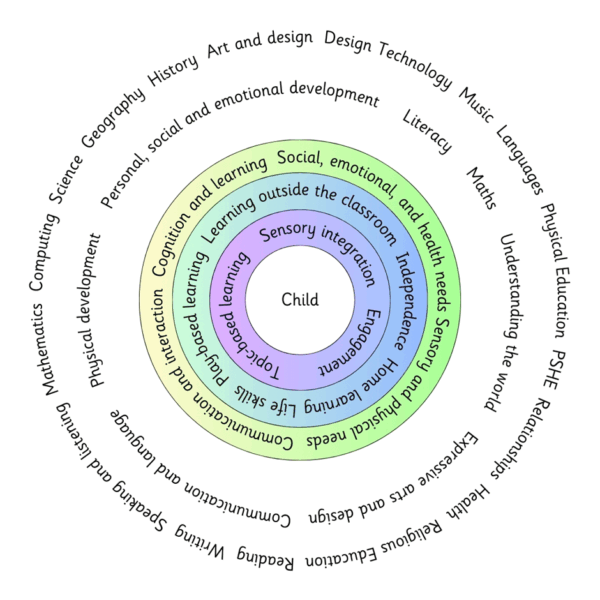
Our curriculum is designed to recognise prior learning, areas of challenge and of emerging strengths and to provide active, engaging learning experiences.
Learning starts in the early years, where we start our key focuses on communication, attention and interaction, developing engagement skills, learning alongside and with others and settling into routines and activities.
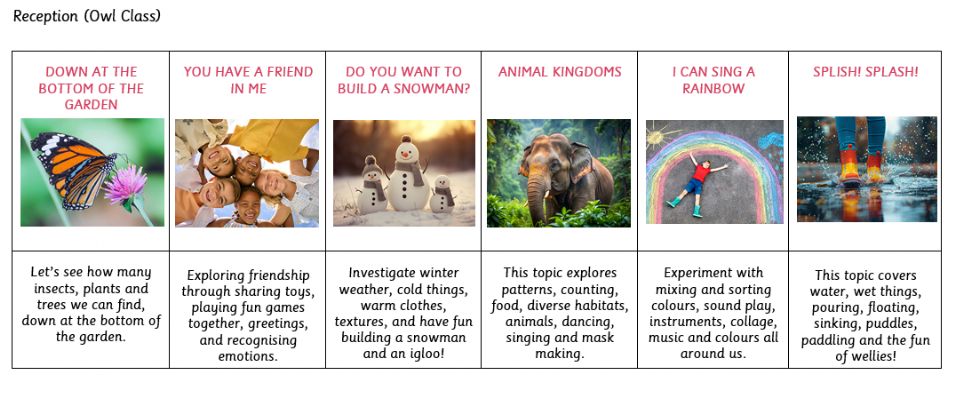
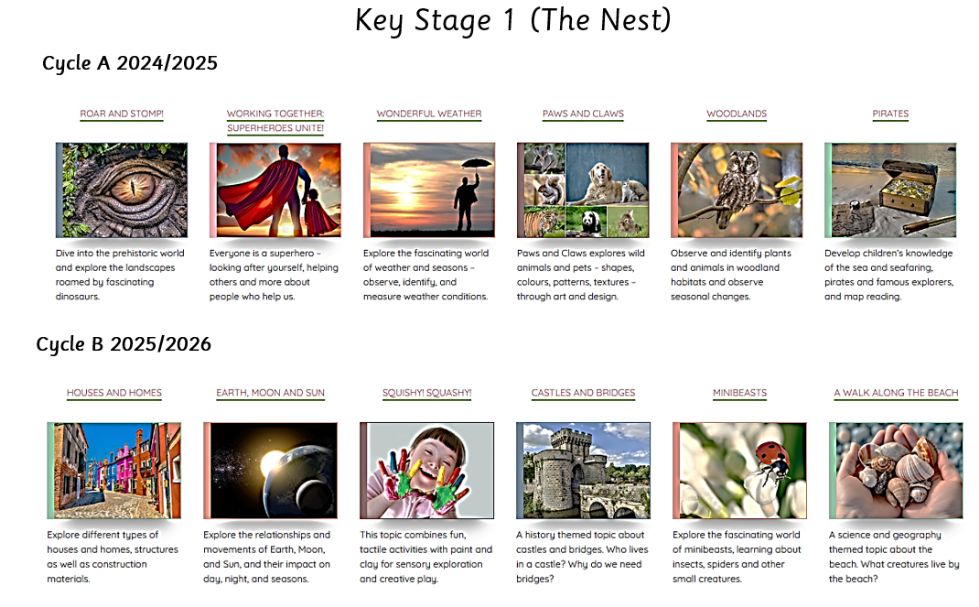
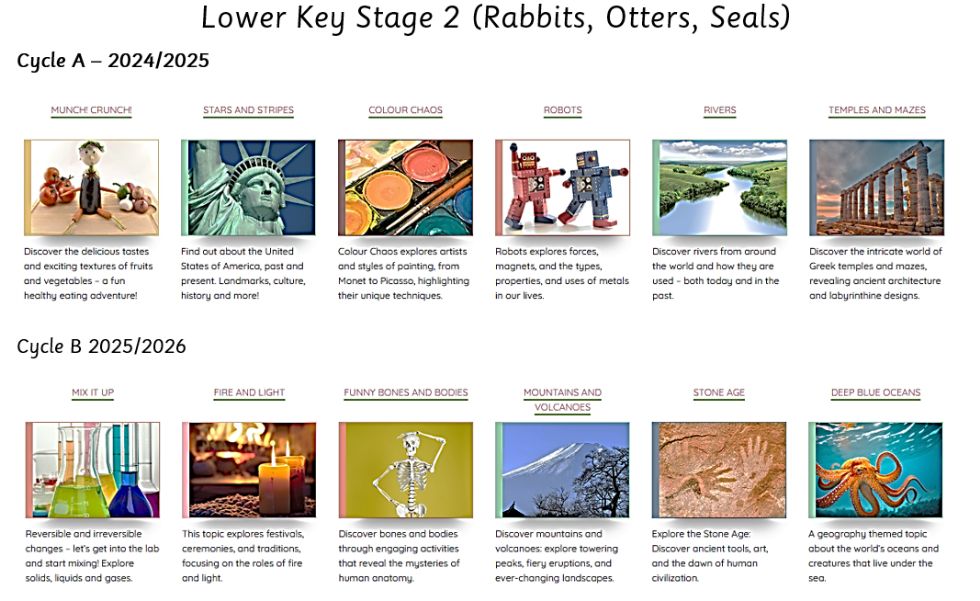
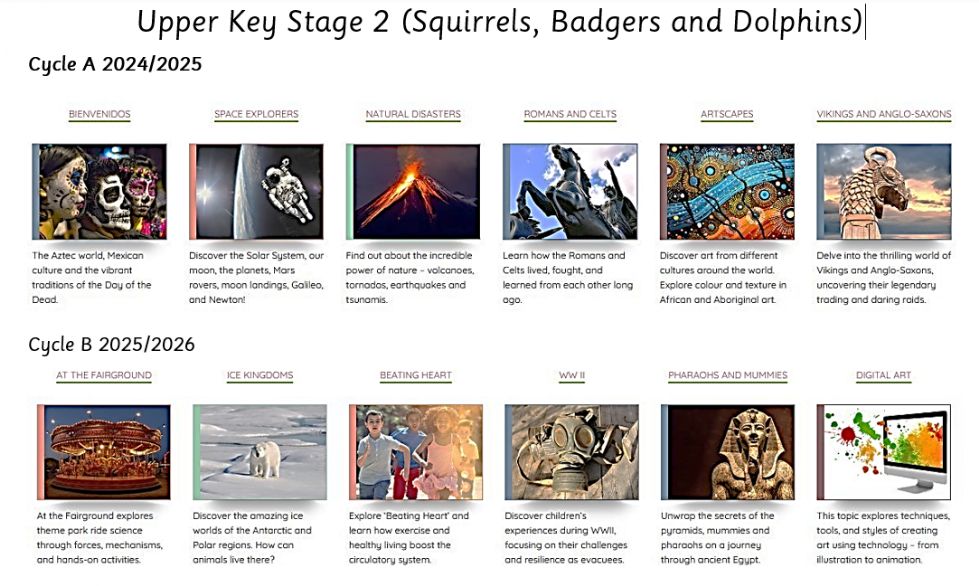
During the ongoing redevelopment of our curriculum, we consulted with children, families and staff to ensure that the curriculum contains common interests and themes that had previously been successful and as such we continue to use a topic-based approach. Reading is promoted throughout the day and throughout the curriculum. Each topic has one or more key texts as well as several supporting texts that are used in lessons and also for the children to read at their leisure. Phonics is a priority throughout school; our phonics scheme is Little Wandle. Reading books are shared with families (online as well as books) and the children spend time in our Story Den choosing a sharing book to take home weekly.
We use a variety of approaches including Attention Autism (‘bucket’) group activities and TEACCH baskets for individualised, target-driven work, as well as more formal class or group learning. Children learn using a multi-sensory approach – sensory story bags, singing bags and mystery boxes capture attention and support engagement. Opportunities to learn outside the classroom and into the local community are plentiful – regular visits are made to a tennis club, swimming pool, garden centres, shops and parks to practise life skills, communication and to develop an understanding of the world around us. Throughout school, where appropriate, we use a PECS-based approach – using visual reinforcements to support receptive and expressive communication, and colourful semantics to support early writing skills.
GHA staff use every opportunity to promote fundamental British Values, independence, resilience and compromise. A developing understanding of the world is supported by a different local, regional or national theme each Friday afternoon in addition to the broad balance of topic work, for example; inter-school sports competitions, multicultural activities including Chinese New Year and Holi, theatrical and musical productions, external visitors such as historical actors, firefighters and dental nurses.